
Why do righteous suffer and wicked flourish? Where is justice?
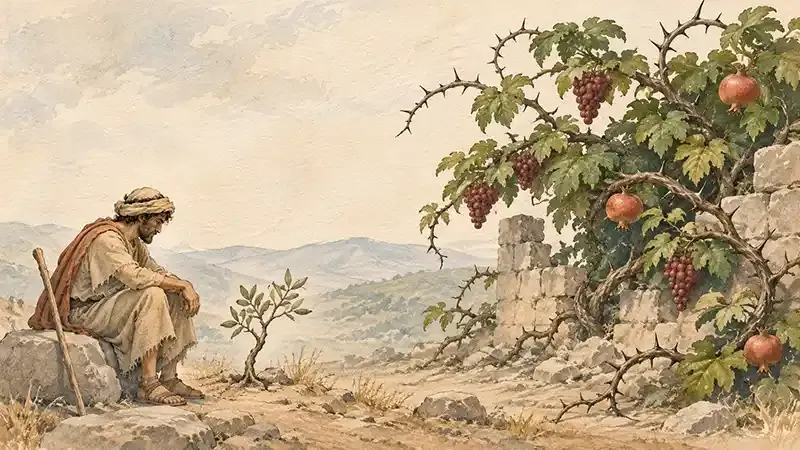
A promise we sometimes struggle to see
Many of us have asked this quietly, sometimes through tears: why do good people suffer while those who do harm seem to live untroubled? If you are hurting, or feel you have been treated unfairly, this article is written for you. The Bible does not avoid the question. It begins with a promise.
The LORD gives righteousness and justice to all who are treated unfairly.( Psalms 103:6 )
If God brings justice to the wronged, why do we see so much injustice around us? We'll look at three questions together, gently and honestly: why is there so much injustice at all, why do good people suffer, and why do those who do harm sometimes seem to escape?
How injustice entered our story
God asked people to treat one another fairly, to help and to love. Yet the Bible is honest about how often we did the opposite. The psalmist recalls Israel's darkest moments, when they sacrificed their own children to the idols of neighbouring peoples.
They even sacrificed their sons and their daughters to the demons. They shed innocent blood, the blood of their sons and daughters. By sacrificing them to the idols of Canaan, they polluted the land with murder. They defiled themselves by their evil deeds, and their love of idols was adultery in the LORD's sight. That is why the LORD's anger burned against his people, and he abhorred his own special possession.( Psalms 106:37-40 )
The pain of this passage is that these were God's own people, and God still grieved over them like a father over his children.
The same pattern appears in everyday life. It is hard to look at ourselves honestly, not only at what we do but at what we think and want. Truth that corrects us is uncomfortable, and flattering words are easier to hear. The prophet Amos described a society that disliked anyone who told the truth at the city gate:
How you hate honest judges! How you despise people who tell the truth!( Amos 5:10 )
Why the consequences came
For generations, people treated one another unfairly, and God did not look away. A little later the prophet Jeremiah was asked to search Jerusalem for even one honest person. God's willingness to forgive the whole city for the sake of a single one shows how patient he was.
"Run up and down every street in Jerusalem," says the LORD. "Look high and low; search throughout the city! If you can find even one just and honest person, I will not destroy the city.( Jeremiah 5:1 )
Eventually Jerusalem fell to Babylon. The book of Lamentations, written in grief after the fall, says that even the nations could not believe it, because they thought the city was untouchable. It names the cause: the leaders, who should have protected people, had shed innocent blood.
Not a king in all the earth-- no one in all the world-- would have believed that an enemy could march through the gates of Jerusalem. Yet it happened because of the sins of her prophets and the sins of her priests, who defiled the city by shedding innocent blood.( Lamentations 4:12-13 )
The lesson is not that God is eager to punish. It is that we cannot keep harming others and expect that nothing changes.
When we walk away from the water
Isaiah gives a picture that helps. If someone walks away from a clear spring, further each day, then gets thirsty and cries, "Where is the water?", the spring has not moved. God did not move away. Our injustice, our dislike of truth and our pride built a distance between us and him. Isaiah says it plainly, and at the end of the passage he even speaks as one of the people: "we" are looking for justice and cannot find it.
Listen! The LORD's arm is not too weak to save you, nor is his ear too deaf to hear you call. It's your sins that have cut you off from God. Because of your sins, he has turned away and will not listen anymore. Your hands are the hands of murderers, and your fingers are filthy with sin. Your lips are full of lies, and your mouth spews corruption. No one cares about being fair and honest. The people's lawsuits are based on lies. They conceive evil deeds and then give birth to sin. They hatch deadly snakes and weave spiders' webs. Whoever falls into their webs will die, and there's danger even in getting near them. Their webs can't be made into clothing, and nothing they do is productive. All their activity is filled with sin, and violence is their trademark. Their feet run to do evil, and they rush to commit murder. They think only about sinning. Misery and destruction always follow them. They don't know where to find peace or what it means to be just and good. They have mapped out crooked roads, and no one who follows them knows a moment's peace. So there is no justice among us, and we know nothing about right living. We look for light but find only darkness. We look for bright skies but walk in gloom. We grope like the blind along a wall, feeling our way like people without eyes. Even at brightest noontime, we stumble as though it were dark. Among the living, we are like the dead. We growl like hungry bears; we moan like mournful doves. We look for justice, but it never comes. We look for rescue, but it is far away from us.( Isaiah 59:1-11 )
Notice the first sentence: God's hand is not too short to save, and his ear is not too heavy to hear. The distance can be crossed, and the way back is open.
The way back is open
Nobody is flawless; that includes all of us.
For everyone has sinned; we all fall short of God's glorious standard.( Romans 3:23 )
That is exactly why the invitation is for everyone. Ezekiel was told to reassure people who feared their past mistakes had sealed their future. God's answer is that past wrongs do not decide what comes next: whoever turns around is welcomed.
"Son of man, give your people this message: The righteous behavior of righteous people will not save them if they turn to sin, nor will the wicked behavior of wicked people destroy them if they repent and turn from their sins. When I tell righteous people that they will live, but then they sin, expecting their past righteousness to save them, then none of their righteous acts will be remembered. I will destroy them for their sins. And suppose I tell some wicked people that they will surely die, but then they turn from their sins and do what is just and right. For instance, they might give back a debtor's security, return what they have stolen, and obey my life-giving laws, no longer doing what is evil. If they do this, then they will surely live and not die. None of their past sins will be brought up again, for they have done what is just and right, and they will surely live. "Your people are saying, 'The Lord isn't doing what's right,' but it is they who are not doing what's right.( Ezekiel 33:12-17 )
So we can open our hearts to God, ask for forgiveness and, from this moment on, close them to what harms us and others. God does not wait with folded arms. He is compassionate like a father, and his correction comes from love.
The LORD is like a father to his children, tender and compassionate to those who fear him.( Psalms 103:13 )
I correct and discipline everyone I love. So be diligent and turn from your indifference.( Revelation 3:19 )
Justice will prevail
And justice will come. God sees what no one else can see: the real motives behind our actions.
But I, the LORD, search all hearts and examine secret motives. I give all people their due rewards, according to what their actions deserve."( Jeremiah 17:10 )
This is a comfort for the wronged: no hidden injustice is hidden from God. It is also a reason to be humble, because he sees us the same way.
But why do truly good people suffer?
This is the hardest part, and it deserves an honest answer. Not all suffering is punishment. Once Jesus saw a man who had been blind from birth, and his disciples asked whose sin caused it. Jesus answered that it was neither of them.
"Rabbi," his disciples asked him, "why was this man born blind? Was it because of his own sins or his parents' sins?" "It was not because of his sins or his parents' sins," Jesus answered. "This happened so the power of God could be seen in him.( John 9:2-3 )
The oldest story about this is the story of Job. At the start, God himself describes Job as an honest and blameless man:
Then the LORD asked Satan, "Have you noticed my servant Job? He is the finest man in all the earth. He is blameless-- a man of complete integrity. He fears God and stays away from evil."( Job 1:8 )
Then Job lost almost everything. His friends were sure of one thing: a person suffers only because they have sinned, so Job must have done something wrong. At the end of the story, God says that his friends were the ones who had it wrong:
After the LORD had finished speaking to Job, he said to Eliphaz the Temanite: "I am angry with you and your two friends, for you have not spoken accurately about me, as my servant Job has.( Job 42:7 )
Job never received a full explanation. But he did meet God, and that changed how he saw everything. So when a good person is going through a hard time, it does not mean that they did something wrong. We often cannot see the whole picture. We know in part what is good and evil, but we cannot apply this knowledge fully, because we only see a piece of the story. God says:
For just as the heavens are higher than the earth, so my ways are higher than your ways and my thoughts higher than your thoughts.( Isaiah 55:9 )
What the Bible's examples show us
Think of Joseph. Sold as a slave by his own brothers, then imprisoned, he was in fact preparing for a high role, becoming the second most powerful person in Egypt. His trials were not a punishment, but a process that shaped his character for what was coming.
Then he sent someone to Egypt ahead of them-- Joseph, who was sold as a slave. They bruised his feet with fetters and placed his neck in an iron collar. Until the time came to fulfill his dreams, the LORD tested Joseph's character.( Psalms 105:17-19 )
Even Jesus, who never sinned, learned through suffering.
Even though Jesus was God's Son, he learned obedience from the things he suffered.( Hebrews 5:8 )
This does not make the pain small. But it shows that pain can have a purpose we cannot see yet.
When we lose someone dear
Some of us have lost parents or loved ones, even after praying day and night for their lives. It is natural to ask, "Why didn't God hear me?" When someone dies, we lose the sound of their voice and their smile, and death looks like the end. But for God it is not the end. Jesus said that God is the God of the living, because for him all are alive. God hears our prayers, and he cares about the ones we lost as much as about us. Isaiah wrote that sometimes the righteous are taken away to be spared from evil, and that they enter peace.
So he is the God of the living, not the dead, for they are all alive to him."( Luke 20:38 )
Good people pass away; the godly often die before their time. But no one seems to care or wonder why. No one seems to understand that God is protecting them from the evil to come. For those who follow godly paths will rest in peace when they die.( Isaiah 57:1-2 )
You are not alone in your grief. God is close to you in it.
When life is hard even though you try
Perhaps you are trying to remain faithful, and yet life is very hard. The Bible does not promise that faith removes every trial. It does say that a loving Father uses difficulties to teach and strengthen his children, the way gold is refined in fire, and that the result is worth it.
As you endure this divine discipline, remember that God is treating you as his own children. Who ever heard of a child who is never disciplined by its father? If God doesn't discipline you as he does all of his children, it means that you are illegitimate and are not really his children at all. Since we respected our earthly fathers who disciplined us, shouldn't we submit even more to the discipline of the Father of our spirits, and live forever? For our earthly fathers disciplined us for a few years, doing the best they knew how. But God's discipline is always good for us, so that we might share in his holiness. No discipline is enjoyable while it is happening-- it's painful! But afterward there will be a peaceful harvest of right living for those who are trained in this way.( Hebrews 12:7-11 )
So be truly glad. There is wonderful joy ahead, even though you have to endure many trials for a little while. These trials will show that your faith is genuine. It is being tested as fire tests and purifies gold-- though your faith is far more precious than mere gold. So when your faith remains strong through many trials, it will bring you much praise and glory and honor on the day when Jesus Christ is revealed to the whole world.( 1 Peter 1:6-7 )
Not every hardship is discipline. Sometimes it is simply life in a broken world. In both cases, God is near.
When the wicked seem to escape
It hurts to see people who harm others live comfortably. Some even use others for their own pleasure. The psalmist Asaph felt the same, and he wrote down his honest feelings: they have no struggles, they are proud and speak against heaven.
They seem to live such painless lives; their bodies are so healthy and strong. They don't have troubles like other people; they're not plagued with problems like everyone else. They wear pride like a jeweled necklace and clothe themselves with cruelty. These fat cats have everything their hearts could ever wish for! They scoff and speak only evil; in their pride they seek to crush others. They boast against the very heavens, and their words strut throughout the earth. And so the people are dismayed and confused, drinking in all their words. "What does God know?" they ask. "Does the Most High even know what's happening?"( Psalms 73:4-11 )
He was troubled for a long time. What changed for him was not an argument, but a place: he went into God's presence, and there he began to see where the path of those people leads.
So I tried to understand why the wicked prosper. But what a difficult task it is! Then I went into your sanctuary, O God, and I finally understood the destiny of the wicked.( Psalms 73:16-17 )
Truly, you put them on a slippery path and send them sliding over the cliff to destruction. In an instant they are destroyed, completely swept away by terrors. When you arise, O Lord, you will laugh at their silly ideas as a person laughs at dreams in the morning.( Psalms 73:18-20 )
Only a simpleton would not know, and only a fool would not understand this: Though the wicked sprout like weeds and evildoers flourish, they will be destroyed forever.( Psalms 92:6-7 )
If you feel anger or envy when you look at such people, that is human, and you can bring it to God honestly, as Asaph did. Over time we can let it go, because their story is not over either.
Don't fret because of evildoers; don't envy the wicked. For evil people have no future; the light of the wicked will be snuffed out.( Proverbs 24:19-20 )
Leaving justice in God's hands
God is always fair, and he sees more than we do. We are quick to judge others, but we do not know their whole story. So we can leave judgment to him and put our energy where it can help: treating everyone around us with respect and love.
The LORD is close to all who call on him, yes, to all who call on him in truth. He grants the desires of those who fear him; he hears their cries for help and rescues them.( Psalms 145:18-19 )
And on days when it still feels unfair, we have this promise: he is with us, and he will not leave.
Do not be afraid or discouraged, for the LORD will personally go ahead of you. He will be with you; he will neither fail you nor abandon you."( Deuteronomy 31:8 )
The story does not end with injustice, or with our tears. The Bible closes with a picture of a day when all of that is over:
He will wipe every tear from their eyes, and there will be no more death or sorrow or crying or pain. All these things are gone forever."( Revelation 21:4 )
If this made you think about your own life, you are welcome to talk to God today, in your own words. Even a short prayer is enough.