
Confused by the Bible? You Might Be Reading a Poem Like a Rulebook
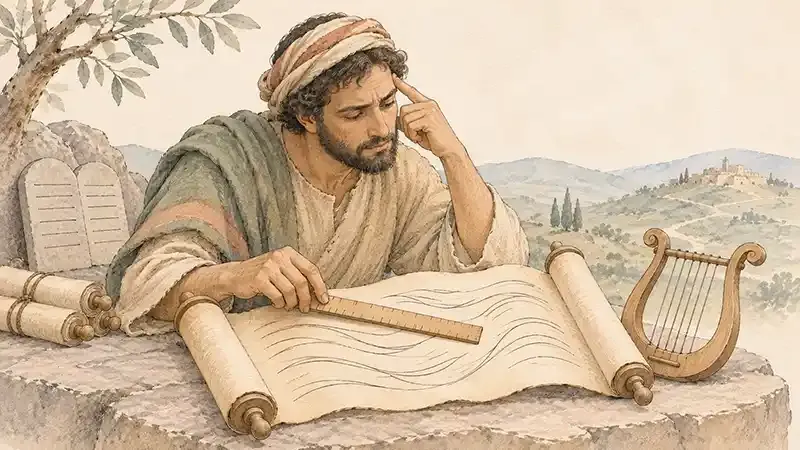
If you have ever opened the Bible, read a strange line about trees clapping their hands or a seven-headed beast rising from the sea, and quietly closed it again—you are not alone.
It can be a lonely, frustrating feeling. Maybe you genuinely wanted to understand what this book says, or maybe you were looking for comfort during a hard week, and instead you walked away feeling confused, let down, or even a little foolish.
Take a deep breath: nothing is wrong with you. The confusion almost never comes from a lack of intelligence. It comes from a simple, fixable mismatch—reading one kind of writing as if it were another.
You already know how to do this
Every day, without even thinking about it, you adjust how you read based on what is in front of you.
You read a text message from a friend differently from a legal contract. You read a song lyric differently from a history textbook. If a friend texts you, "My boss is going to kill me," you don't call the police—you know they are expressing stress, not reporting a crime.
The Bible is a library of 66 ancient books, and it contains just as many different styles—or genres—of writing. When we flatten all of them into a single, literal rulebook, the text stops making sense. When we learn to recognize what kind of writing we are holding, the pages suddenly come alive.
1. Poetry: Painted in feelings, not facts
Nearly a third of the Old Testament is poetry—most famously in the book of Psalms, as well as large parts of the prophets.
Ancient poetry was written to be sung, prayed, and felt. It uses bold pictures to capture human emotions like grief, fear, joy, and wonder. Look at these two well-known lines:
He will cover you with his feathers. He will shelter you with his wings. His faithful promises are your armor and protection.( Psalms 91:4 )
You will live in joy and peace. The mountains and hills will burst into song, and the trees of the field will clap their hands!( Isaiah 55:12 )
Nobody reading these lines in the ancient world thought God literally had bird feathers, or that trees had literal hands to clap. The writers were painting a picture of safety and joy.
If you have ever felt overwhelmed and didn't have the words to explain how you felt, biblical poetry was written for moments just like that. Notice how raw and honest this poet is about feeling exhausted and forgotten:
As the deer longs for streams of water, so I long for you, O God. I thirst for God, the living God. When can I go and stand before him? Day and night I have only tears for food, while my enemies continually taunt me, saying, "Where is this God of yours?"( Psalms 42:1-3 )
Reading poetry like a science textbook misses the whole point. Poetry isn't trying to give you a diagram; it is trying to sit with you in how life actually feels.
2. Wisdom writing: General patterns, not magic formulas
Books like Proverbs, Ecclesiastes, and Job are called wisdom literature. They are collections of hard-earned life lessons from people who watched the world closely.
A lot of heartache happens when readers treat a proverb like an unbreakable promise. For example:
Direct your children onto the right path, and when they are older, they will not leave it.( Proverbs 22:6 )
Lazy people are soon poor; hard workers get rich.( Proverbs 10:4 )
Many caring parents have read Proverbs 22:6, done their absolute best to raise their children well, and then felt crushed by guilt when their child still made painful choices.
Understanding the genre lifts that heavy burden. A proverb is a general observation about how life usually works—not a rigid guarantee. In fact, the Bible itself includes books like Ecclesiastes and Job specifically to remind us that life is often unfair and doesn't always follow neat rules:
I have observed something else under the sun. The fastest runner doesn't always win the race, and the strongest warrior doesn't always win the battle. The wise sometimes go hungry, and the skillful are not necessarily wealthy. And those who are educated don't always lead successful lives. It is all decided by chance, by being in the right place at the right time.( Ecclesiastes 9:11 )
"Why do the wicked prosper, growing old and powerful?( Job 21:7 )
The Bible doesn't pretend life is a simple vending machine where good input always equals good output. Wisdom writing gives you a compass, not a crystal ball.
3. History and biographies: Real events, told with a heart
Books like Genesis, 1 and 2 Samuel, and the four Gospels (Matthew, Mark, Luke, and John) tell the stories of real people and real events.
However, ancient historians didn't write like modern news cameras trying to record every minute in strict order. They chose specific moments to show why those events mattered. Look at how Luke and John explain their approach:
Many people have set out to write accounts about the events that have been fulfilled among us. They used the eyewitness reports circulating among us from the early disciples. Having carefully investigated everything from the beginning, I also have decided to write a careful account for you, most honorable Theophilus, so you can be certain of the truth of everything you were taught.( Luke 1:1-4 )
Jesus also did many other things. If they were all written down, I suppose the whole world could not contain the books that would be written.( John 21:25 )
When you read biblical history, you aren't just reading a dry list of dates. You are reading carefully chosen stories about real, flawed people—and how they navigated courage, failure, love, and forgiveness.
4. Personal letters: Listening to half a phone call
Most of the New Testament is made up of personal letters written by early Christian leaders—like Paul, Peter, and John—to small, struggling communities across the Roman Empire.
Reading these letters is a bit like overhearing one side of a phone conversation. The writer is often answering specific questions or calming down a specific argument in that town. Notice how Paul literally refers to a note they had just sent him:
Now regarding the questions you asked in your letter. Yes, it is good to live a celibate life.( 1 Corinthians 7:1 )
And some letters are deeply tender, written from one friend to another about a delicate personal situation:
That is why I am boldly asking a favor of you. I could demand it in the name of Christ because it is the right thing for you to do. But because of our love, I prefer simply to ask you. Consider this as a request from me-- Paul, an old man and now also a prisoner for the sake of Christ Jesus. I appeal to you to show kindness to my child, Onesimus. I became his father in the faith while here in prison.( Philemon 1:8-10 )
When a line in a New Testament letter feels sharp or puzzling, pause and remember: you are reading someone else's mail. Asking "What problem were they trying to solve?" turns confusing rules into human, understandable conversations.
5. Prophecy and visions: Picture language for hard times
If there is one part of the Bible that makes people anxious, it is the vivid, strange imagery in books like Daniel and Revelation—filled with beasts, numbers, and dramatic cosmic scenes.
Many people avoid these books completely because they have been taught to read them like a terrifying secret code about the end of the world.
In the ancient world, this style of writing was actually comfort literature. It was written for ordinary people living under brutal empires, using dramatic symbols—much like modern political cartoons—to say, "Evil looks huge right now, but it will not win forever."
Look at the actual heart of the book of Revelation—not fear, but a promise of healing for tired, hurting people:
God blesses the one who reads the words of this prophecy to the church, and he blesses all who listen to its message and obey what it says, for the time is near.( Revelation 1:3 )
He will wipe every tear from their eyes, and there will be no more death or sorrow or crying or pain. All these things are gone forever."( Revelation 21:4 )
You don't need a complicated chart to understand the core message of biblical visions. They were written to give courage to people who felt small.
Give yourself grace as you read
You don't have to master every genre overnight, and you don't need to feel intimidated when a passage catches you off guard. Even people who have studied the Bible their entire lives still pause and ask, "What kind of writing am I looking at here?"
Next time you open a page and feel stuck, just step back for a second. Ask yourself: Is this a poem? A proverb? A history? A personal letter? A vision?
That one small pause can turn frustration into curiosity—and help an ancient library feel a little more like a welcoming conversation.
Keep exploring
A lot of people genuinely want to read the Bible. Maybe you picked it up hoping for a little peace, a bit of wisdom, or honest answers to big life…
If you have ever read the Old Testament and then flipped to the New Testament, you might feel like you just walked into a completely different book.…
If you have ever tried to read the Bible from page one, you probably know how it ends. You start strong in Genesis, push through the drama of Exodus,…