
Why did God ask to kill animals as sacrifices and offerings for sin?
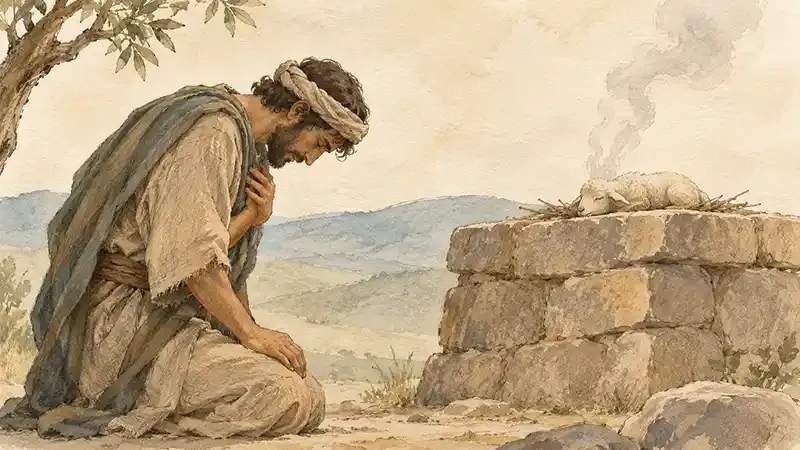
When we read the Bible's detailed instructions for animal offerings on the altar, many of us feel uneasy. It is hard to see how God could be pleased by the death of innocent animals, or why forgiveness should have anything to do with it. These are honest questions, and they deserve a gentle, unhurried look.
It began with people
The first offerings in the Bible come from Cain and Abel. The text does not say that God asked them to bring anything. They brought gifts on their own:
When it was time for the harvest, Cain presented some of his crops as a gift to the LORD. Abel also brought a gift-- the best of the firstborn lambs from his flock. The LORD accepted Abel and his gift,( Genesis 4:3-4 )
It is easy to conclude from this that God prefers animals to fruit. But look at what God says to Cain afterwards. He does not speak about the type of gift. He speaks to Cain's heart, with real tenderness:
You will be accepted if you do what is right. But if you refuse to do what is right, then watch out! Sin is crouching at the door, eager to control you. But you must subdue it and be its master."( Genesis 4:7 )
What mattered was how each of them came to God. Abel brought "the best" of what he had, and Cain brought "some" of his crops.
What God has always wanted
Across the Bible, God keeps saying the same thing about offerings. He is looking for the heart behind them. He says this through the prophet Hosea:
I want you to show love, not offer sacrifices. I want you to know me more than I want burnt offerings.( Hosea 6:6 )
King David learned the same thing when he prayed after a serious failure:
You do not desire a sacrifice, or I would offer one. You do not want a burnt offering. The sacrifice you desire is a broken spirit. You will not reject a broken and repentant heart, O God.( Psalms 51:16-17 )
The prophet Isaiah explains what happens when offerings are brought without a humble heart. God cares more about the person who "trembles at my word" than about the gift:
My hands have made both heaven and earth; they and everything in them are mine. I, the LORD, have spoken! "I will bless those who have humble and contrite hearts, who tremble at my word. But those who choose their own ways-- delighting in their detestable sins-- will not have their offerings accepted. When such people sacrifice a bull, it is no more acceptable than a human sacrifice. When they sacrifice a lamb, it's as though they had sacrificed a dog! When they bring an offering of grain, they might as well offer the blood of a pig. When they burn frankincense, it's as if they had blessed an idol.( Isaiah 66:2-3 )
And Micah's people ask the question out loud. What can we bring? Thousands of rams? Our own children? God's answer is simple and kind:
Should we offer him thousands of rams and ten thousand rivers of olive oil? Should we sacrifice our firstborn children to pay for our sins? No, O people, the LORD has told you what is good, and this is what he requires of you: to do what is right, to love mercy, and to walk humbly with your God.( Micah 6:7-8 )
Why blood at all?
If God did not want offerings for their own sake, why did the system exist? The Bible explains that it was meant to show how serious sin is, and how much it costs, while also showing how God provides a way to be made right with Him:
for the life of the body is in its blood. I have given you the blood on the altar to purify you, making you right with the LORD. It is the blood, given in exchange for a life, that makes purification possible.( Leviticus 17:11 )
At the same time, the Bible is honest that this system had limits. It could point to forgiveness, but it could not finish the work:
This is an illustration pointing to the present time. For the gifts and sacrifices that the priests offer are not able to cleanse the consciences of the people who bring them.( Hebrews 9:9 )
But instead, those sacrifices actually reminded them of their sins year after year. For it is not possible for the blood of bulls and goats to take away sins.( Hebrews 10:3-4 )
The animal sacrifices were like a shadow, a reminder of sin year after year. They could not change a human heart.
A better way, given in love
So God did something remarkable. He did not ask us to bring something more. He gave something Himself:
"For God loved the world so much that he gave his one and only Son, so that everyone who believes in him will not perish but have eternal life.( John 3:16 )
But God showed his great love for us by sending Christ to die for us while we were still sinners.( Romans 5:8 )
Jesus told a parable about this. A landowner sends his cherished son to the people who rent his land, hoping they will respect him. It is a picture of how God sent Jesus, and of what happened next:
" 'What will I do?' the owner asked himself. 'I know! I'll send my cherished son. Surely they will respect him.' "But when the tenant farmers saw his son, they said to each other, 'Here comes the heir to this estate. Let's kill him and get the estate for ourselves!'( Luke 20:13-14 )
In the old system, a priest first made an offering for his own sins and then for the people's. Jesus was without sin. He did not need to offer anything for Himself, and He did not ask for the blood of innocent animals. He gave Himself, in full agreement with the Father's will, once for all:
Unlike those other high priests, he does not need to offer sacrifices every day. They did this for their own sins first and then for the sins of the people. But Jesus did this once for all when he offered himself as the sacrifice for the people's sins.( Hebrews 7:27 )
With his own blood-- not the blood of goats and calves-- he entered the Most Holy Place once for all time and secured our redemption forever.( Hebrews 9:12 )
What this means for us
The weight we feel in these stories reflects how heavy the cost of sin really is. It does not mean that God is cruel. It is a cost He chose to carry Himself, so that we would not have to carry it alone.
So the invitation is a gentle one. We are welcome to come to God just as we are, and to tell Him honestly where we have gone wrong:
But if we confess our sins to him, he is faithful and just to forgive us our sins and to cleanse us from all wickedness.( 1 John 1:9 )
If we do, we find that the sacrifice has already been made for us, and that what He is looking for is a heart that is willing to come home.